


Services like Zelle® are a quick, convenient, and accessible way to send and receive money without needing a trip to the bank. However, as their popularity grows, you may be wondering about the tax implications. Whether you’ll owe taxes on Zelle® transactions isn’t a simple “yes” or “no” answer. Let’s look into Zelle® taxes and whether they report to the IRS.
Note: “Zelle® taxes” isn’t an official term, but we may use it throughout the article to refer to how the IRS treats money you receive through bank-to-bank services like Zelle®.
Does Zelle® report to the IRS?
The first big question here is whether Zelle® reports to the Internal Revenue Service (IRS).
Zelle® does not report its transactions to the IRS or impose taxes. This means you won’t be receiving a Form 1099-K from Zelle® directly, and the network won’t withhold tax from any payments you receive.
Bank-to-bank transfer network
The main differentiator here among similar applications is that Zelle® is a bank-to-bank transfer service, setting it apart from third-party settlement organizations, like PayPal®, Venmo®, and Cash App®. As a bank-to-bank transfer network, Zelle® is directly connected to your bank account, so any payments you send or receive are sent from or to that account. Unlike Venmo®, there’s no way for Zelle® to hold your balance in the app. It’s more of an extension of your bank account than a separate payment service.
The IRS requires third-party settlement apps, such as Venmo® and Cash App®, to send you Form 1099-K if reporting thresholds are met, but this rule doesn’t apply to Zelle®. Zelle® isn’t required to send you Form 1099-K, meaning you’ll need to report any taxable income you’ve earned through the network yourself (depending on your net earnings).
Are Zelle® payments taxable?
Zelle® payments aren’t taxable on the app itself, but you still may owe taxes to the IRS on payments you receive. This generally applies to payments for self-employment or other taxable income. More common personal payments, like sending and receiving money from friends and family, typically aren’t taxable.
Do you have to pay taxes on Zelle®?
Because Zelle® is a bank-to-bank transfer network, they aren’t legally required to send you a Form 1099-K. However, you still may owe taxes on any business or self-employment income you’ve earned through using the app.
Do you have to report Zelle® on taxes?
Zelle® payments generally become taxable if they come from self-employment (think side gigs and independent services). If your net earnings from self-employment for the year total $400 or more, the IRS requires you to report that income on your tax return as you may owe self-employment tax.
What kind of transactions are taxable?
Whether you need to report your Zelle® transactions to the IRS depends on whether the payments are taxable.
Examples of taxable income through Zelle®
Taxable payments on Zelle® generally include any type of transaction that’s generating business income through self-employment —think freelance, gigs, side jobs, and services.
- Small business owners offering beauty services like hair, eyelash extensions, eyebrow laminating, etc.
- Selling homemade work, like pottery and other crafts
- In-home tutoring
- Home services, such as cleaning, gardening, handywork, etc.
- Baby or pet sitters
Examples of nontaxable transactions
Some common examples of nontaxable transactions on Zelle® include:
- Sending your friend money to cover your portion of the dinner bill
- Gifting a family member money for their birthday
- Sending a friend or family member money to pay for a flight or hotel room
Gifts typically aren’t considered taxable income for the recipient. However, in some cases, the giver may need to file a gift tax return if the gift exceeds the annual exclusion amount. For tax year 2025, that annual exclusion is $19,000 per recipient.
How to report Zelle® payments to the IRS
If you receive business payments through Zelle®, you’ll report that income and related expenses on Schedule C (Form 1040). If your net earnings from self-employment are $400 or more for the year, you must also use Schedule SE to figure your self-employment tax. While $400 or more is the federal threshold, state thresholds may vary.
You’ll include your net earnings through Zelle® on the Part I: Income section of Schedule C.
How to calculate self-employment tax on Schedule SE
We’ve included a preview of Part I of Schedule SE below:
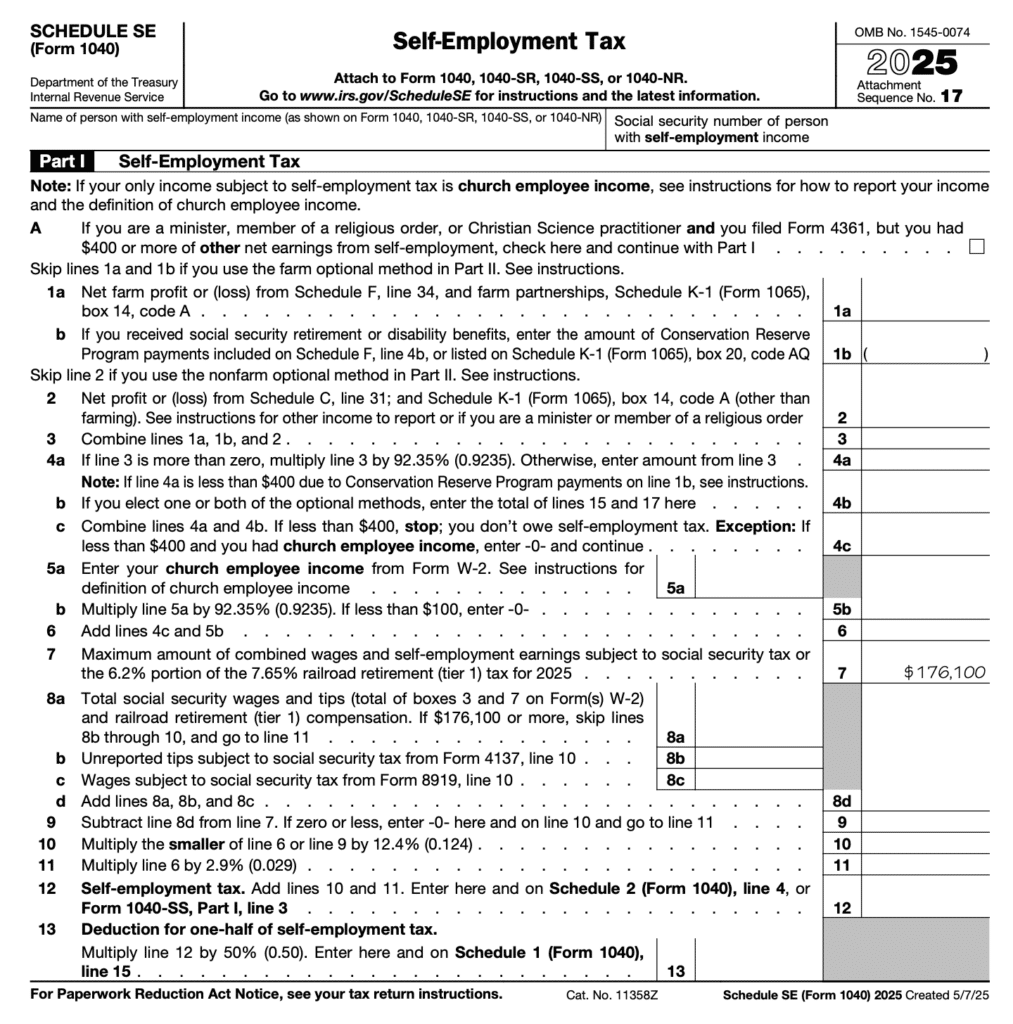
You can use Schedule SE to determine how much self-employment tax you owe. As mentioned above, you usually file Schedule SE only if your self-employment earnings are $400 or more. The tax rate for self-employment is generally 15.3%, and the IRS
- Self-employment income for Schedule SE = your net profit from self-employment × 92.35%
- Self-employment tax = that result × 15.3%
Note: When figuring how much you owe, you should use your net profit, not gross income.
Will Zelle® send me a Form 1099?
No, Zelle® won’t send you a Form 1099-K. Because it’s a bank-to-bank transfer service and not a third-party payment app, Zelle® doesn’t have a reporting requirement to send you a Form 1099-K for any payments made on the app.
FAQs
The bottom line
If you’re self-employed and earning money through the Zelle® network, you should file that income on your individual tax return. However, if your friend reimbursed you for dinner or you received a personal gift, that payment would usually not be taxable income.
Self-employed? File your individual tax return with TaxAct®.
This article is for informational purposes only and not legal or financial advice.
All TaxAct offers, products and services are subject to applicable terms and conditions.
All trademarks not owned by TaxAct, LLC that appear on this website are the property of their respective owners, who are not affiliated with, connected to, sponsored by, or sponsors of TaxAct, LLC.